
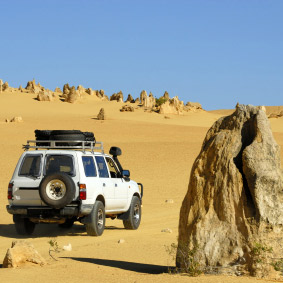
While most unsealed roads are permitted to be traveled on, you should always check for any road restrictions to the areas you are traveling to, prior to booking.
It is very important to make sure you are fully informed of what to expect and how to safely handle the 4WD vehicle.
This easy to follow guide is a great starting point!
Many people opt to hire a 4WD over a regular 2WD vehicle essentially because these vehicles are permitted to travel on unsealed roads. 4WD vehicles are designed to drive through obstacles that conventional vehicles would not be able to overcome.
Therefore if your holiday is likely to take you over tough terrain or far out into the outback, than a 4WD will be the best option for you.
Ensuring safety is upheld while driving a 4WD vehicle is of primary concern to rental companies, therefore all 4WD hire packages include:
- Recovery shovel
- Satellite safety beacon
- Air jack
- Safety and Survival Guide
- RACQ insurance
- Fire extinguisher
Safety is extremely important while driving a 4WD. Ensuring you are comfortable driving these vehicles is an important thing to consider before you depart.
Other important safety tips to keep in mind include:
- Ensure you are aware of the effects of what water and dust may have on your safe progress.
- Always carry 30-50% more food, water and petrol while driving in a sandy area.
- Consider the driving conditions you are likely to encounter before you depart.
- If driving across a ditch or logs, cross it at an angle to ensure one tyre goes over the obstacle at once.
- To conserve petrol, keep the windows closed while traveling at high speeds along the highway. This will reduce wind resistance.
- Try to maintain your speed as constant speeding up and slowing down will consume more fuel.
Driving on the sand at Fraser Island can be a difficult task at times. To make things a little easier, the best thing you can do is deflate your tyres a little, making sure you don't exceed 60 kilometres an hour while they are deflated. You should also avoid driving these deflated tyres on the bitumen, so make sure you always carry a good quality air compressor so that you can quickly pump them back up.
While driving on the sand you should also ensure that you never park on the wet part of the sand, especially on the beach. Avoid this and you will avoid getting bogged and stranded on the beach.
Traveling on unsealed roads will no doubt bring you face to face with countless hills and steep terrain. The most important thing to keep in mind while tackling these hills is to go straight up or down. If you don't drive straight you may actually roll the vehicle.
Above all, be sure to remember the age old saying: If in doubt, don't!